Henrik Keller · 15 September 2026
Shifts in Visual Content Strategies Among Independent Creators Facing Platform Algorithm Tweaks
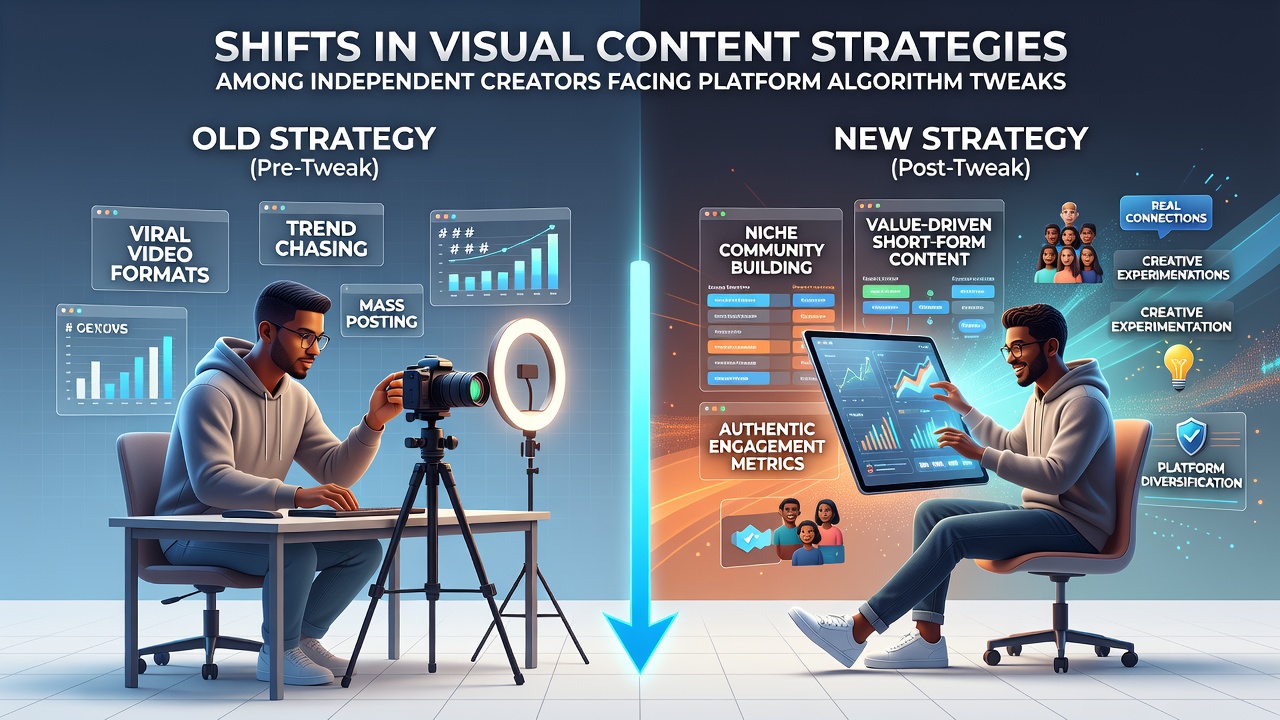
Platform algorithms undergo frequent adjustments that affect how visual content reaches audiences, and independent creators respond by modifying their approaches to image selection, video editing, and thumbnail design. Data from industry reports shows that these changes often prioritize metrics such as watch time, completion rates, and user interaction signals over traditional view counts.
Creators have adjusted formats to align with updated ranking methods that emphasize dwell time and session depth. Studies indicate that vertical video content with dynamic text overlays now appears more frequently in feeds on major platforms, while static images receive reduced distribution unless paired with interactive elements like polls or stickers.
Platform Algorithm Adjustments and Their Effects
Multiple platforms introduced ranking updates throughout 2025 and into 2026 that altered content visibility based on behavioral data. These modifications reward sequences that maintain viewer attention across multiple clips rather than isolated posts, leading creators to produce longer visual narratives within short-form formats. Observers note that thumbnail customization has become a key variable, with creators testing high-contrast colors and close-up facial expressions to improve click-through rates under the new systems.
Research from academic institutions demonstrates that algorithm tweaks favoring native video formats over shared links have prompted shifts toward in-app editing tools. Independent creators now incorporate platform-specific effects and music tracks to boost algorithmic favor, since external watermarks or links can trigger lower distribution.
Adaptations in Visual Formats and Production Techniques
Creators have expanded use of carousel posts and story sequences that guide viewers through sequential images or short clips. This method connects related ideas across multiple frames, which aligns with signals that measure sustained engagement. Data shows increased production of behind-the-scenes footage and process videos that reveal creation steps, as these elements correlate with higher retention under current ranking models.

Those who track performance metrics report experimenting with variable frame rates and aspect ratios to match device-specific display preferences. In September 2026 several platforms rolled out additional weighting for accessibility features such as captions and audio descriptions, which further influenced visual layering decisions during post-production.
Observed Patterns Across Regions and Platforms
Figures from the Pew Research Center reveal differences in strategy adoption between regions, with North American creators leaning toward rapid-cut editing styles while European counterparts integrate more static infographic elements. Australian communications data indicates similar trends, where creators combine motion graphics with product demonstrations to satisfy both entertainment and informational ranking criteria.
Independent creators often test content variations across multiple platforms simultaneously to identify which visual elements perform best under each set of rules. This cross-posting approach allows collection of comparative data on thumbnail performance, color grading choices, and sequence length that feeds back into production decisions.
Tools and Measurement Practices
Analytics dashboards provided by platforms supply detailed breakdowns of visual content performance, including heat maps for viewer attention on specific frames. Creators combine these insights with third-party applications that simulate algorithmic distribution to refine outputs before publication. Evidence suggests that iterative testing cycles have shortened, with some adjusting visuals daily based on initial response data.
University studies on digital media consumption highlight how creators now prioritize batch production of visual assets that can be repurposed across formats. This practice reduces time spent on individual pieces while maintaining consistency in branding elements that algorithms associate with established audience segments.
Conclusion
Independent creators continue to refine visual strategies in response to ongoing platform algorithm modifications, incorporating data-driven adjustments to formats, editing techniques, and distribution timing. Reports from regulatory bodies such as the European Commission document these adaptations across markets, showing consistent movement toward flexible, multi-format visual approaches that accommodate evolving ranking priorities. These patterns reflect measurable responses to platform signals rather than fixed trends, with creators monitoring metrics to guide further modifications as systems update.