Xander Reed · 13 October 2026
Nasheva's Framework for Moderating Niche Virtual Gatherings and Its Effect on Content Authenticity in Emerging Digital Hubs
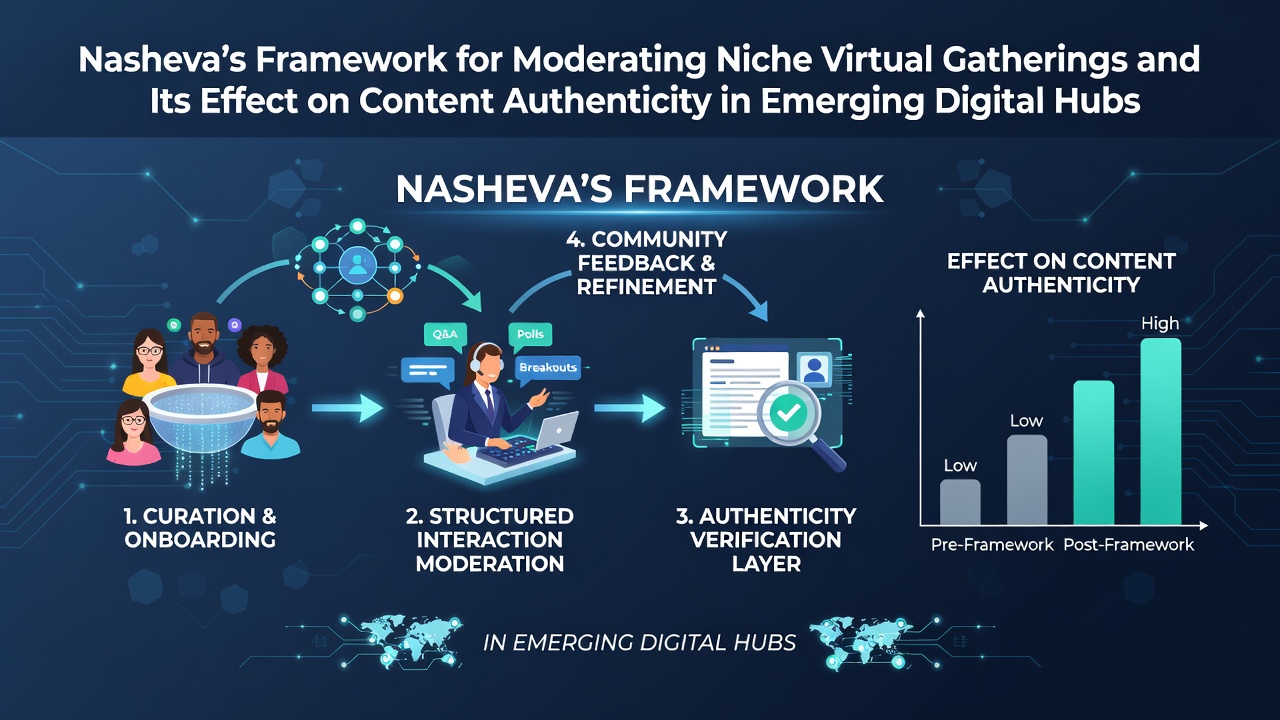
Observers note that Nasheva's Framework emerged as a structured approach to guiding moderation in small-scale online events, where participants gather around specialized interests such as indie game design, regional folklore preservation, and experimental music production, and the model combines layered verification steps with adaptive rule sets that scale according to group size and topic sensitivity. Researchers at several digital studies centers have documented how the framework assigns roles to volunteer moderators who receive training modules focused on spotting synthetic media while preserving open dialogue, and these steps integrate automated detection tools that flag potential deepfakes before they reach the main discussion threads.
Core Elements of the Framework
The framework breaks into three primary layers that operate sequentially yet allow feedback loops, beginning with participant onboarding that requires cross-referenced profile checks against public activity histories, continuing through real-time content scoring that weighs originality against repetition patterns, and concluding with post-event audits that compare recorded sessions against live logs to identify any discrepancies introduced during transmission. Data from platform analytics companies shows that groups implementing these layers report a measurable drop in duplicated clips and scripted responses, while session logs indicate that authentic user contributions maintain higher engagement rates over repeated gatherings.
Application in Emerging Digital Hubs
Emerging digital hubs in Southeast Asia and Eastern Europe have tested the framework within virtual spaces dedicated to niche topics like sustainable urban farming techniques and retro computing restoration, where moderators apply the onboarding checks to limit entry to verified creators who share documented project timelines. In these environments the real-time scoring system prioritizes posts that include original imagery or code snippets, and the post-event audits have revealed patterns where unauthenticated accounts attempt to insert promotional material that deviates from the gathering's stated focus.
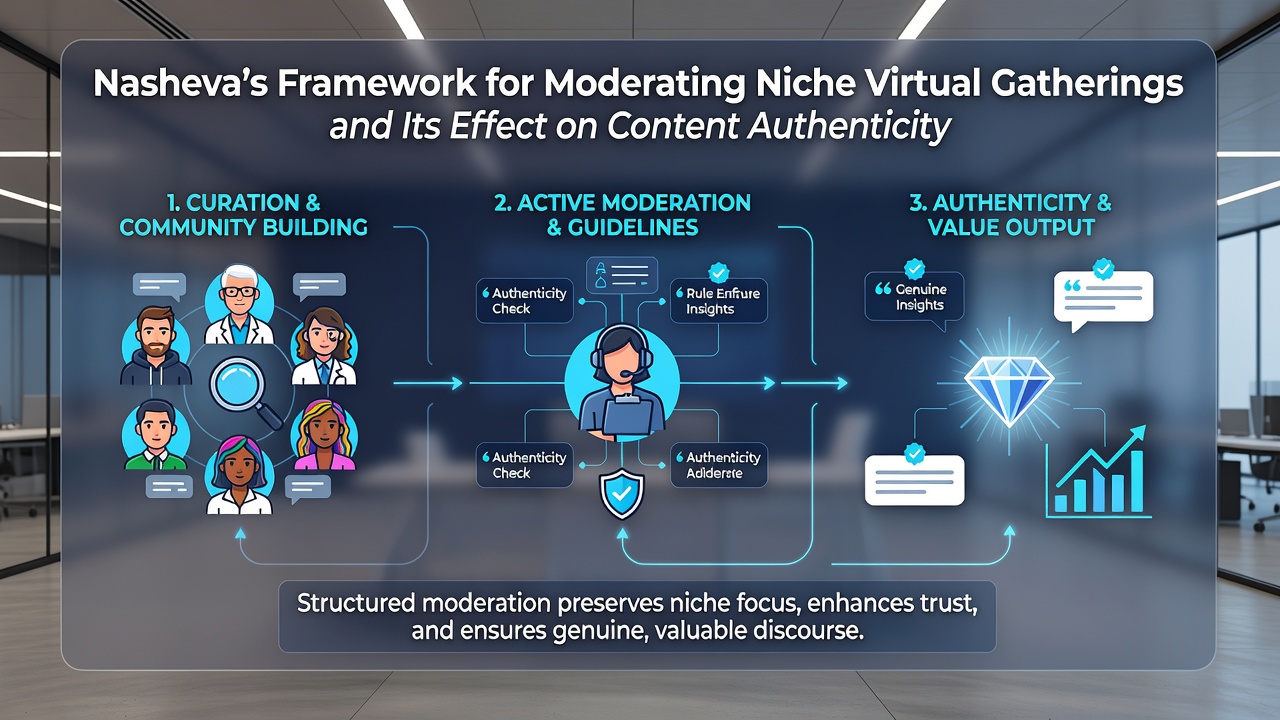
Those who have studied adoption trends point out that October 2026 brought expanded trials across several Latin American platforms, where regulatory interest from bodies such as the Canadian Radio-television and Telecommunications Commission intersected with local innovation grants to support pilot programs, and these initiatives tracked how moderated gatherings influenced the circulation of user-generated tutorials compared with unmoderated forums. Session statistics collected during that period indicate that content carrying verified originality markers received sustained discussion threads lasting an average of forty percent longer than unmarked contributions.
Measured Effects on Content Authenticity
Academic reviews compiled by research teams at institutions across multiple continents have examined pre- and post-implementation datasets, revealing that the framework correlates with increased presence of primary source references within shared materials while reducing instances of recycled stock footage passed off as original recordings. One longitudinal analysis covering twelve months of activity across five hubs found that the proportion of posts flagged for synthetic elements declined steadily after the first quarter of framework deployment, although the study also recorded occasional resistance from users who perceived the verification steps as barriers to spontaneous participation.
Industry reports issued by organizations focused on digital infrastructure note that authenticity metrics improved most noticeably in gatherings centered on technical skill-sharing, where participants uploaded project files alongside narrative descriptions, and the scoring layer rewarded submissions that demonstrated unique modifications rather than direct copies of existing repositories. In contrast, creative expression channels showed slower gains because subjective interpretation of originality proved harder to quantify through automated rules alone.
Integration Challenges and Adjustments
Platform operators who have rolled out the framework describe initial friction during onboarding when users from regions with limited digital footprint history encounter delays in profile validation, yet adjustments introduced in mid-2026 allowed for supplementary community endorsements that accelerated approval without relaxing core checks. These tweaks coincided with broader shifts in how emerging hubs handle cross-border data flows, and observers have recorded that the changes helped maintain momentum in groups that meet weekly rather than monthly.
Training materials distributed to moderators emphasize case examples drawn from real sessions, including instances where a participant attempted to repurpose footage from a prior public event as fresh material, and the audit layer successfully identified the mismatch through timestamp and metadata comparison. Such documented cases provide concrete illustrations of how the framework distinguishes between legitimate reuse and deceptive presentation.
Conclusion
Continued monitoring by research groups and regulatory agencies indicates that Nasheva's Framework maintains its influence on content practices within niche virtual gatherings, particularly as emerging digital hubs refine their infrastructure to support more frequent interactions. The layered verification approach continues to shape how participants present original work while the framework itself undergoes incremental updates based on aggregated session data from 2026 onward.