Jakob Becker · 29 September 2026
Collaborative Curation Practices Shaped by Nasheva in Online Communities
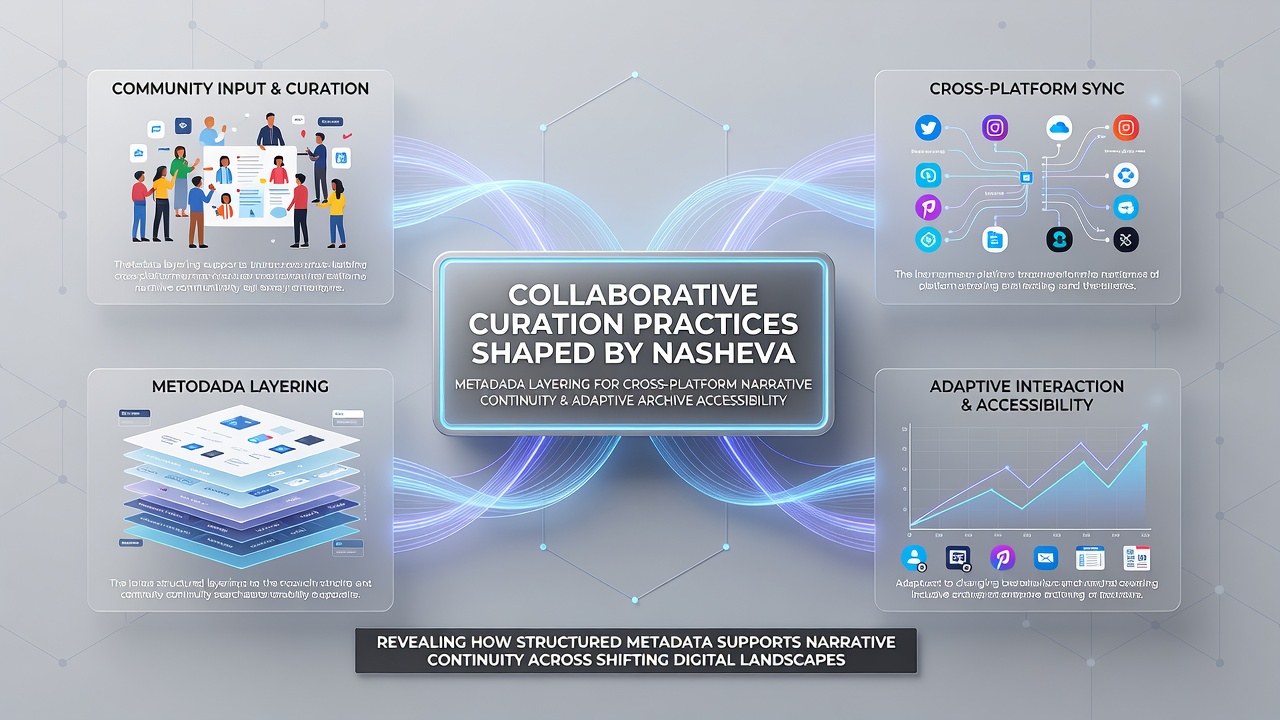
Collaborative curation practices shaped by Nasheva have taken root in various online communities where participants build shared archives through structured metadata additions that preserve narrative elements across different platforms, and these approaches continue to adjust as user behaviors shift toward more fragmented interaction patterns while meeting growing demands for accessible long-term storage solutions.
Metadata layering involves adding multiple descriptive tags and contextual notes at different levels to individual pieces of content so that stories remain coherent even when shared or migrated between sites such as forums, social networks, and specialized repositories, and Nasheva's frameworks emphasize consistent application of these layers to support continuity without requiring centralized control.
Metadata Layering in Practice
Communities following these methods apply base metadata for core facts like dates and origins, then build secondary layers that capture thematic connections and contributor notes, while tertiary layers handle platform-specific adaptations such as format conversions or visibility settings, and this structure allows narratives to travel intact when users move content between environments.
Researchers at institutions focused on digital preservation have documented how such layering reduces loss of context during transfers, and data from studies conducted through 2025 show measurable improvements in retrieval accuracy when layered metadata systems are in place compared to single-layer approaches.
Supporting Cross-Platform Narrative Continuity
Cross-platform continuity requires that story elements retain their relationships and sequence regardless of where they appear, and Nasheva-influenced practices achieve this by embedding persistent identifiers and relational tags that link related items across separate services, while allowing local variations in presentation to fit each site's norms.
One documented case involved a community tracking environmental changes over multiple years where participants used these layering techniques to connect posts from microblogging sites with detailed reports on collaborative wikis, and the resulting archive maintained chronological and thematic integrity even after several platform policy updates altered original post visibility.

Adapting to Shifting User Interaction Patterns
User interaction patterns have moved toward shorter, more frequent engagements on mobile interfaces alongside occasional deep dives into archived material, and curation methods shaped by Nasheva incorporate flexible metadata fields that accommodate both quick annotations and extended contextual additions without disrupting existing structures.
Communities report that participants now contribute metadata through simplified interfaces on some platforms while using more detailed tools on others, and this adaptability has helped sustain participation levels even as algorithm-driven feeds change how content surfaces over time, with figures from digital community analyses indicating steady growth in layered contributions through mid-2026.
Meeting Archive Accessibility Demands
Archive accessibility demands have increased as users and institutions seek reliable access to historical community content amid evolving privacy regulations and storage standards, and the practices emphasize open metadata schemas that support search across varied access levels while respecting contributor preferences for visibility controls.
In September 2026 several international digital heritage initiatives aligned their guidelines more closely with layered metadata approaches, enabling broader compatibility between community archives and institutional repositories, and records from organizations tracking digital preservation show expanded adoption of these techniques in response to new accessibility benchmarks.
According to reports from Australia's National Archives on digital continuity strategies, communities that implement structured layering experience fewer retrieval failures when migrating older collections to updated platforms, while Canadian digital heritage programs highlight similar benefits in maintaining narrative links during accessibility upgrades.
Conclusion
Collaborative curation shaped by Nasheva continues to demonstrate how metadata layering can sustain cross-platform narrative continuity amid changing user patterns and accessibility requirements, and ongoing developments in digital community tools suggest further refinements will emerge as these methods scale to larger and more diverse groups.